
10 Best Antivirus 2012
Antivirus software is very vital to the health of our computer or laptop. Sometimes we confuse what is the most powerful antivirus that can detect all types of viruses. There are many types of antivirus in the world, no antivirus can only detect a virus but can not eliminate the virus. There is also a very cruel antivirus that deletes all the viruses are detected, though not necessarily the virus file.
Therefore we must be careful in choosing which antivirus would we use to combat the virus that will attack the operating system or laptop computer, do not get us wrong because it would be fatal for the safety and health of our computer or laptop.
Here is 10 best antivirus 2012 in Techno News version :

Antivirus paid. To use this antivirus you are required to pay 23.97 USD per year. From several sources that we can, this antivirus rank first in terms of precision to detect the virus and cure the virus affected files.

Antivirus paid. Kaspersky license according to its website 39.95 USD per year. Can detect various kinds of viruses, Trojans, spam, hackers, and more. Recently, a hybrid approach to combine innovative digital security, cloud-based AV protection technology with a sophisticated and capable of providing very fast response, more effective and complex as this, from the growing threat of viruses. also been recognized as one of the AV world who are experts in detecting a variety of viruses and new viruses that have not even discovered by another AV.


Antivirus paid. Panda license 31.99 USD per year according to its website. Able to detect and eradicate viruses, malware, trojans, and able to protect Firewall. Although this new virus belonging to the ranks of the best antivirus test by AV from various sources.

4. F-Secure Anti-Virus
Antivirus is classified as very mild, very suitable for use on netbook, notebook or laptop. And also on the PC that has a lower specification. As with any other antivirus f secure work very quickly and efficiently to prevent the rootkit, virus spread via email and prevents malware into your registry.


Stop cyber attacks on power grids with 'Bullet time'
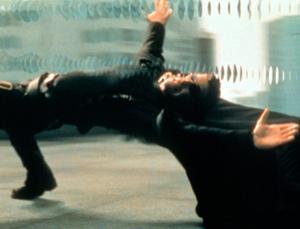 IN THE MATRIX, the famous "bullet time" effect
showed how Keanu Reeves's character Neo was able to sway out of the path
of incoming bullets, as time appeared to slow. Now the film has
inspired engineers to develop a way to cope with cyber attacks on
crucial infrastructure, such as electricity grids, water utilities and
banking networks.
IN THE MATRIX, the famous "bullet time" effect
showed how Keanu Reeves's character Neo was able to sway out of the path
of incoming bullets, as time appeared to slow. Now the film has
inspired engineers to develop a way to cope with cyber attacks on
crucial infrastructure, such as electricity grids, water utilities and
banking networks.
AMD Trinity faster than Liano
 A slide for marketing by the industry partners AMD, which concluded that the Mainstream Platform named "Trinity" was leaked to the web. In it, AMD claims that the next generation APU offers up to 29 percent higher productivity performance (read: CPU performance), and up to 56 percent higher visual performance, as compared with the current generation (Llano). At least the graphics performance figures seem consistent with the results of initial tests.
Samsung Introduces the thinnest Optical Drive on the World
 Samsung recently launched the external optical drive that is claimed to be the thinnest in the world.
The device has a size of about 14 mm or 18% thinner than conventional DVD writer. Its weight was about 8% lighter than similar devices, so it is an ideal accessory for ultrabook who do not have the optical drive as well as tablet PCs.
With names Samsung SE-218BB, it has ability to read and write to CDs and DVDs. Specifications offered are able to use to write CDs up to 24x and 8x speeds for DVD.
Besides the computer, this device can be used on a tablet PC with Android operating system 3.1 to above. Even later, support for Windows 8 RT was possible.
iPhone 5 Speculation on WWDC 2012
 Apple has officially announced the WorldWide Developer Conference (WDC) in 2012 which will be held at 11 until June 15 at Moscone West, San Francisco.
"During the five day conference, later the developers will learn about the future of IOS and OS X that allows them to create innovation in the delivery of new applications," said Philip Schiller, Apple's senior vice president of Worldwide Marketing.
This statement was also once reportedly denied rumors that the iPhone 5 will be launched at the conference.
SNSD selected to be advertisement models for Intel Asia
 SNSD was recently announced to be the new models for Intel.
According to an industry representative on January 9th, Intel
recently selected SNSD as their next advertisement models, and will soon
make an official annoucment.
The terms and conditions of the contract have not yet been revealed,
but it was said that Intel plans to use SNSD for advertisements and
promotions for the whole of Asia.
Intel revealed their new graphics integrated processor at the ‘CES 2011′ in Las Vegas
on January 5th, and announced that they are currently preparing for a
massive shift in their marketing scheme, with SNSD allegedly being their
main models.
Game Maker Games
Well, this is some list of game build with Game maker.
Elu

elu12b.zip 1.7 MB
Johnny's Odyssey

jodyssey11.zip 3.4 MB


Game Maker

Such a compiler is Game Maker Lite. This software can be used by beginners and professionals alike, since it sports a fun and friendly environment that allows users to manufacture simple or complex games without the requirement of prior programming experience.
All steps are done through a drag-and-drop technique. Simply provide the software with the command you wish to be executed, and it shall perform it as requested. But if you are keen on learning a gaming programming language, then Game Maker Lite can be switched to Advanced mode.This will allow you to go through more difficult settings and learn a trick or two about how to code a game.
iPhone vs Android
Android growing popularity skyrocketed in the wilds of the operating system. Not surprisingly, the latest operating system made by Internet giant Google Inc., Android OS was quickly adopted by some manufacturers as the rapid growth of smartphone mobile (smart phone) globally.
The appearance-based mobile operating system Android, or Android phones are often called, is often touted as the biggest competitor first iPhone released by Apple. Its existence until now is often matched with the only smart phone Steve Jobs made it.
Users were confused until now, what advantages each of these touch-screen smart phone? Who is superior? On the operator side, Android is considered more troublesome than the iPhone.
Samsung Galaxy S III and iPhone 5

Recent leaked Galaxy S III showed a formal invitation that may come from Samsung.Launch time is listed in the city of London on May 22, 2012. There has been no confirmation from Samsung, but once they've made sure the Galaxy S III was introduced in mid-year.
"Successor to Galaxy S II will be revealed at a separate event in the first half of Samsung this year, adjacent to the availability of commercial products," Samsung said in a statement some time ago.
Operating Systems
Without an operating system, a computer would not be useful. Minimally, you need an operating
system to locate files and to start programs. The programs that you run need services
from the operating system to access devices and to interact with other programs. Operating
systems on large computers need to provide more services than those on personal computers.
Here are some typical services:

• Program loading. Every operating system provides some way of launching application
programs. The user indicates what program should be run, usually by typing in the name
of the program or by clicking on an icon. The operating system locates the program code,
loads it in memory, and starts it.
• Managing files. A storage device such as a hard disk is, electronically, simply a device
capable of storing a huge sequence of zeroes and ones. It is up to the operating system to
bring some structure to the storage layout and organize it into files, folders, and so on.
The operating system also needs to impose some amount of security and redundancy into
the file system so that a power outage does not jeopardize the contents of an entire hard
disk. Some operating systems do a better job in this regard than others.
WinZip 16.5 Build 10095
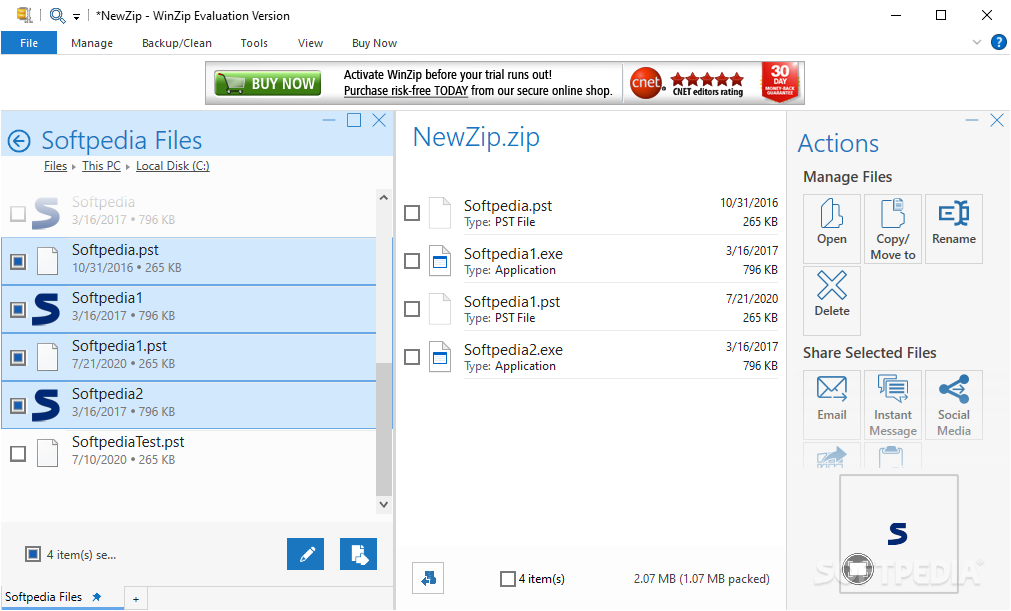
If you're a computer user who typically handles a multitude of various files, then you would probably like a compression tool that is good enough to suppress the size of a file, without causing any damage to its contents.
Such a piece of software is WinZip, for example.
The First Bug
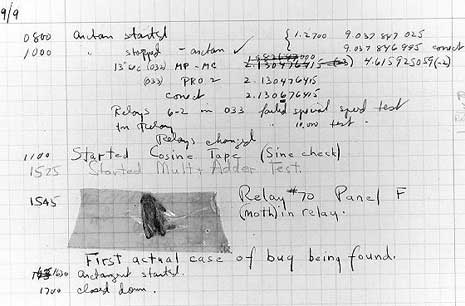
According to legend, the first bug was found in the Mark II, a huge electromechanical computer
at Harvard University. It really was caused by a bug—a moth was trapped in a relay
switch.
Actually, from the note that the operator left in the log book next to the moth (see
Figure 13), it appears as if the term “bug” had already been in active use at the time.
The pioneering computer scientist Maurice Wilkes wrote: “Somehow, at the Moore
School and afterwards, one had always assumed there would be no particular difficulty in getting programs right. I can remember the exact instant in time at which it dawned on me
that a great part of my future life would be spent finding
Figure 13 The First Bug
mistakes in my own programs.”
The Therac-25 Incidents
The Therac-25 is a computerized device that delivers radiation treatment to cancer patients
(see Figure 12). Between June 1985 and January 1987, several of these machines delivered
serious overdoses to at least six patients, killing some of them and seriously maiming the
others.

The machines were controlled by a computer program. Bugs in the program were directly
responsible for the overdoses. According to [1], the program was written by a single programmer,
who had since left the manufacturing company producing the device and could not
be located. None of the company employees interviewed could say anything about the educational
level or qualifications of the programmer.
The investigation by the federal Food and Drug Administration (FDA) found that the
program was poorly documented and that there was neither a specification document nor a
formal test plan. (This should make you think. Do you have a formal test plan for your programs?)
The overdoses were caused by an amateurish design of the software that controlled different
devices concurrently, namely the keyboard, the display, the printer, and the radiation
device itself. Synchronization and data sharing between the tasks were done in an ad hoc
way, even though safe multitasking techniques were known at the time. Had the programmer
enjoyed a formal education that involved these techniques or taken the effort to study
the literature, a safer machine could have been built. Such a machine would have probably
involved a commercial multitasking system, which might have required a more expensive
computer.
Berners-Lee: Demand your data from Internet companies
DG News Service - Tim Berners-Lee has said that the problem with companies like Facebook and Google is not that they collect vast troves of data about their users, but that they don't share with them what they learn from it.
Berners-Lee, who is often described as the inventor of the World Wide Web, was speaking out against the U.K.'s proposal to allow government intelligence to monitor digital communications. Berners-Lee is a U.K. native.
He acknowledged that users reveal deeply personal information about themselves through their use of the Web.
"You get to know every detail, you get to know, in a way, more intimate details about their life than any person that they talk to, because often people will confide in the Internet as they find their way through medical websites ... or as an adolescent finds their way through a website about homosexuality, wondering what they are and whether they should talk to people about it," he said.
But rather than pushing companies to stop collecting the information, Berners-Lee suggested technology companies should show more restraint in how they use the information and should share it with the users themselves.
"We're moving towards a world in which people agree not to use information for particular purposes. It's not whether you can get my information, it's when you've got it, what you promise not to do with it," he said.
In a scenario that some privacy experts saw as naive, the technology pioneer said an insurance company, for instance, could agree not to use personal details gleaned from Facebook to set the most profitable premium for a would-be customer, even if one of its agents was connected to the prospective customer on the social network.
The problem, according to Berners-Lee, is that "social networking silos" like Facebook and Google "have the data and I don't. "One side of this that I think gets insufficient airing is the value to me of that data," Berners-Lee said.
Berners-Lee said location data from his mobile phones could help him track his exercise habits, for example.
It's hard to say if reams of unstructured data would help individuals less tech-savvy than Berners-Lee, however. Justin Brookman, director of the Project on Consumer Privacy at the Center for Democracy and Technology, was skeptical. But Ryan Calo, with the Center for Internet and Society at Stanford University, said he thought the data could be quite helpful to individuals.
The privacy experts agreed that releasing the data would educate consumers on the issue of Internet privacy, which can seem abstract.
"It's good for companies to make their information available to people. But from my point of view it's just so people have an awareness of what sort of information companies have about them, and collect, and track and keep," Brookman said.
Calo thought seeing the data companies have collected on them would clarify privacy questions for many users.
Compared to "reading generalities about the information that a company might have about you, which is what privacy policies are, being able to access the information that the company does have is much better," he said.
In order for users to draw the kind of useful personal insights Berners-Lee pointed to, data from one source would have to be compatible with data from another. As an advocate of the "open Web," Berners-Lee often argues for data formats to be standardized.
Standardizing data formats would also make it easier for users to opt to leave a service whose privacy practices they don't like, Calo said. That could spur "privacy competition," in which Web services companies would compete for users based on the quality of their privacy policies. The result could be more consumer privacy.
Calo said, by not addressing consumer concerns about privacy, Berners-Lee was "missing a selling point of his idea" of an open Web.
Source : www.computerworld.com
Yes, IT departments should worry about Google Drive
Google Drive is poised to give IT departments yet another headache to deal with.
Drive, the name of Google's data-syncing cloud storage service that's rumored to launch sometime next week, will likely offer many of the features of popular storage apps such as Dropbox and Box, including 5GB of free storage with upgrades of up to 100GB of storage for users willing to pay for service.
But there's a big difference between other cloud storage apps and Google Drive, which is namely that the former are run by small, independent firms while the latter will be run by one of the largest companies in tech and will thus be harder to avoid. Forrester analyst Frank Gillett says that the ubiquity of Google applications such as Gmail, YouTube and Maps will make it much harder for enterprises to block Google Drive than Dropbox or Box.
Privacy Policy
Privacy Policy for www.technocrawler.blogspot.com
If you require any more information or have any questions about our privacy policy, please feel free to contact us by email at arbiyantezar@yahoo.co.id.
At www.technocrawler.blogspot.com, the privacy of our visitors is of extreme importance to us. This privacy policy document outlines the types of personal information is received and collected by www.technocrawler.blogspot.com and how it is used.
Log Files
Like many other Web sites, www.technocrawler.blogspot.com makes use of log files. The information inside the log files includes internet protocol ( IP ) addresses, type of browser, Internet Service Provider ( ISP ), date/time stamp, referring/exit pages, and number of clicks to analyze trends, administer the site, track users movement around the site, and gather demographic information. IP addresses, and other such information are not linked to any information that is personally identifiable.
Cookies and Web Beacons
www.technocrawler.blogspot.com does use cookies to store information about visitors preferences, record user-specific information on which pages the user access or visit, customize Web page content based on visitors browser type or other information that the visitor sends via their browser.
.:: Google, as a third party vendor, uses cookies to serve ads on www.technocrawler.blogspot.com.
.:: Google's use of the DART cookie enables it to serve ads to your users based on their visit to www.technocrawler.blogspot.com and other sites on the Internet.
.:: Users may opt out of the use of the DART cookie by visiting the Google ad and content network privacy policy at the following URL - http://www.google.com/privacy_ads.html
Some of our advertising partners may use cookies and web beacons on our site. Our advertising partners include .......
Google Adsense
Amazon
These third-party ad servers or ad networks use technology to the advertisements and links that appear on www.technocrawler.blogspot.com send directly to your browsers. They automatically receive your IP address when this occurs. Other technologies ( such as cookies, JavaScript, or Web Beacons ) may also be used by the third-party ad networks to measure the effectiveness of their advertisements and / or to personalize the advertising content that you see.
www.technocrawler.blogspot.com has no access to or control over these cookies that are used by third-party advertisers.
You should consult the respective privacy policies of these third-party ad servers for more detailed information on their practices as well as for instructions about how to opt-out of certain practices. www.technocrawler.blogspot.com's privacy policy does not apply to, and we cannot control the activities of, such other advertisers or web sites.
If you wish to disable cookies, you may do so through your individual browser options. More detailed information about cookie management with specific web browsers can be found at the browsers' respective websites.
Megaupload Case Not a Slam Dunk, Judge Says
That's according to the judge in the case, and the development comes after months of drama involving the now shuttered filing-sharing website.
U.S. District Judge Liam O'Grady made the proclamation while hearing arguments about deleting Megaupload member files, which are enormously expensive to maintain.
The judge said a discussion about wiping Megaupload's database could be premature and that a more relevant question was why Megaupload had not been formally served with criminal papers by the United States.
The Explosive Growth of Personal Computers
In 1971, Marcian E. “Ted” Hoff, an engineer at Intel Corporation was working on a chip for
a manufacturer of electronic calculators. He realized that it would be a better idea to develop
a general-purpose chip that could be programmed to interface with the keys and display of a
calculator, rather than to do yet another custom design. Thus, the microprocessor was born.
At the time, its primary application was as a controller for calculators, washing machines,
and the like. It took years for the computer industry to notice that a genuine central processing
unit was now available as a single chip.

Hobbyists were the first to catch on. In 1974 the first computer kit, the Altair 8800, was
available from MITS Electronics for about $350. The kit consisted of the microprocessor, a
circuit board, a very small amount of memory, toggle switches, and a row of display lights.
Purchasers had to solder and assemble it, then program it in machine language through the
toggle switches. It was not a big hit.
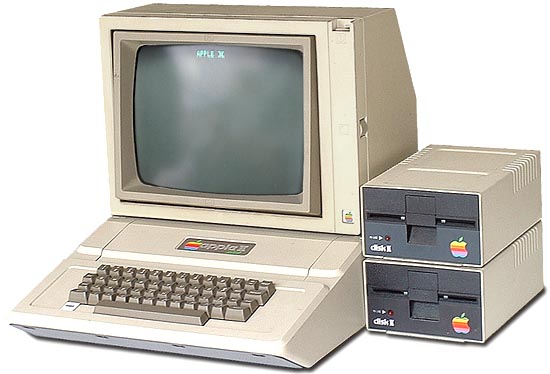
The first big hit was the Apple II. It was a real computer with a keyboard, a monitor, and
a floppy disk drive. When it was first released, users had a $3,000 machine that could play
Space Invaders, run a primitive bookkeeping program, or let users program it in BASIC. The
original Apple II did not even support lowercase letters, making it worthless for word processing.
The breakthrough came in 1979, with a new spreadsheet program, VisiCalc (see
Figure 8). In a spreadsheet, you enter financial data and their relationships into a grid of rows
and columns. Then you modify some of the data and watch in real time how the others change.
For example, you can see how changing the mix of widgets in a manufacturing plant
might affect estimated costs and profits. Middle managers in companies, who understood
computers and were fed up with having to wait for hours or days to retrieve their data runs
from the computing center, snapped up VisiCalc and the computer that was needed to run it.
For them, the computer was a spreadsheet machine.


